Hyaluronic Acid in K-Beauty: Complete 2026 Guide
Korean brands use 3 to 8 molecular weights of hyaluronic acid in a single formula — here's how it works, the 8 best HA products to try, and the layering mistake drying out your skin.

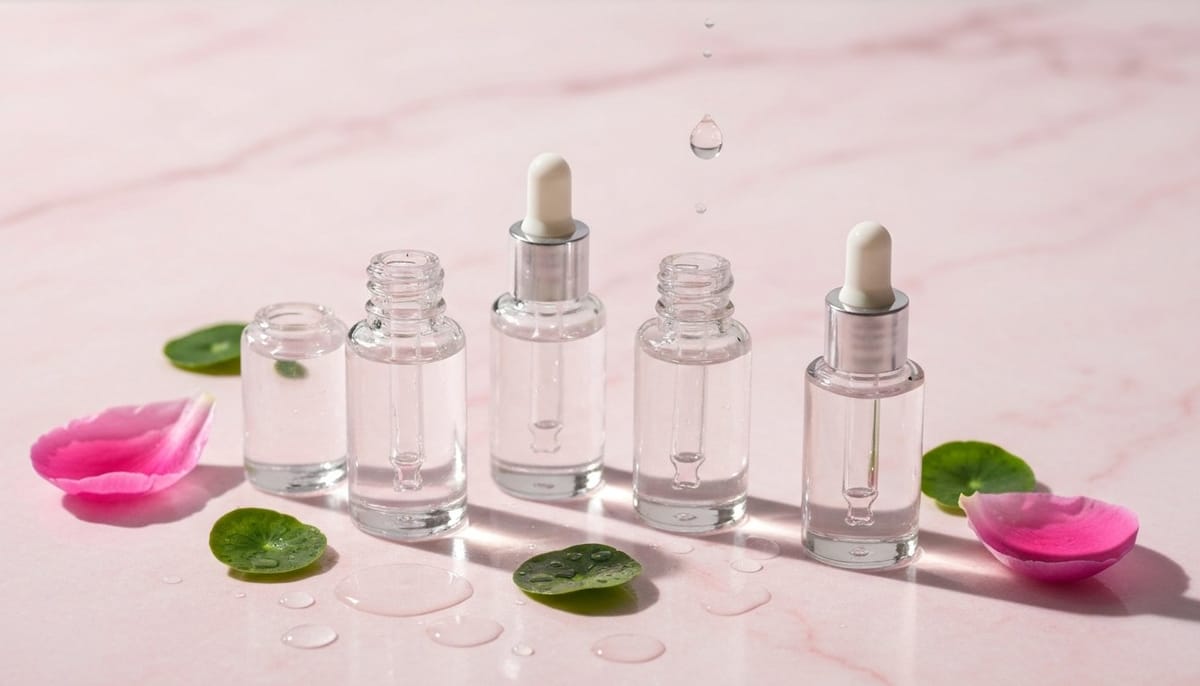
The most-asked Korean skincare ingredient question of 2026? Hyaluronic acid — and Korean brands have quietly mastered it better than anyone. While Western serums often rely on a single high-molecular-weight HA, top Korean formulas layer 3 to 7 different molecular weights so the molecule can hydrate every layer of your skin at once. After three years of testing K-beauty hyaluronic acid serums, ampoules, and toners, I'll explain exactly how Korean brands use HA differently, which products are worth the hype, and the layering mistake that's secretly drying out your skin.
By Mina Park
What Is Hyaluronic Acid? (And Why It's the Backbone of K-Beauty Hydration)
Hyaluronic acid (HA) is a sugar molecule your body produces naturally — about 50% of it lives in your skin, where it binds up to 1,000 times its weight in water. Topical HA mimics this function: it pulls water from the air (and from deeper skin layers) into your stratum corneum, the outermost barrier.
That's the textbook definition. Here's what matters for K-beauty fans: not all hyaluronic acid behaves the same way. The molecule comes in dozens of sizes, measured in daltons (Da). High-molecular-weight HA (above 1,000 kDa) sits on the surface and forms a hydrating film. Low-molecular-weight HA (under 50 kDa) penetrates deeper to plump the skin from within. Korean formulators figured out years ago that combining multiple weights is more effective than relying on one.
How Do Korean Brands Use Hyaluronic Acid Differently?
Three things separate K-beauty HA formulas from their Western counterparts:
1. Multi-molecular weight stacking. Look at the ingredient list of any premium Korean HA serum and you'll see entries like sodium hyaluronate, hydrolyzed hyaluronic acid, sodium hyaluronate crosspolymer, hyaluronic acid — that's four different molecular weights in one bottle. Isntree's Hyaluronic Acid Watery Sun Gel famously contains seven types of HA.
2. Pairing with humectant boosters. Korean formulators rarely use HA alone. They pair it with panthenol, beta-glucan, trehalose, glycerin, and madecassoside to amplify the hydration effect and prevent the "HA pulling moisture out of skin in dry climates" problem.
3. Featherweight textures. Western HA serums often feel tacky. Korean HA essences have a watery, slip-on texture that layers under sunscreen without pilling — a non-negotiable in 8-step Korean routines.
Multi-Molecular Weight HA: The Korean Innovation
The phrase you'll see on packaging is "5-D HA" or "7-D HA" — referring to the number of distinct molecular weights blended in the formula. Here's what each weight class actually does:
| Molecular Weight | Where It Acts | Primary Effect |
|---|---|---|
| > 1,800 kDa (HMW) | Skin surface | Forms a hydrating film, smooths fine lines instantly |
| 800–1,800 kDa | Upper stratum corneum | Boosts barrier function, reduces TEWL |
| 50–800 kDa | Mid stratum corneum | Long-lasting hydration, plumps surface |
| 10–50 kDa (LMW) | Deep epidermis | Penetrates further, plumps from within |
| < 10 kDa (Oligo HA) | Cellular level | Signals fibroblast activity, supports natural HA production |
A 2024 clinical study published in the Journal of Cosmetic Dermatology found that multi-weight HA formulas delivered up to 47% greater hydration at the 24-hour mark compared to single-weight formulations — which is exactly why Korean brands have leaned into this approach.
Best Korean Hyaluronic Acid Products: Editor-Tested Picks
I've tested over 30 Korean HA products across the last three years. These eight earned permanent spots in my routine — and the rotation of friends I've gifted them to.
| Product | HA Types | Best For | Price Tier |
|---|---|---|---|
| Torriden DIVE-IN Low Molecule HA Serum | 5 weights | All skin types, beginners | $ |
| Isntree Hyaluronic Acid Watery Essence | 8 weights | Layering under SPF | $$ |
| Round Lab 1025 Dokdo Toner | 3 weights + sea minerals | Sensitive, dehydrated skin | $ |
| Beauty of Joseon Calming Serum | 2 weights + green tea | Reactive skin, post-actives | $ |
| Goodal Heartleaf Calming Moisture Serum | 3 weights + 80% heartleaf | Combination, oily skin | $$ |
| Sulwhasoo First Care Activating Serum | 4 weights + ginseng | Mature skin, anti-aging | $$$$ |
| Mixsoon Bifida Biome Essence | 2 weights + fermented lysate | Barrier repair | $$ |
| Anua Heartleaf Quercetinol Pore Serum | 3 weights + quercetin | Oily skin, large pores | $$ |
Editor's Top Pick: Torriden DIVE-IN Low Molecule HA Serum
If I had to recommend one Korean HA product to someone starting out, this is it. Torriden's serum is fragrance-free, pH-balanced at 5.5, and packs five distinct molecular weights ranging from oligo HA (under 10 kDa) to high-molecular-weight (over 1,800 kDa). The texture is the thinnest watery essence I've used — it disappears in seconds and never pills under sunscreen. At under $20 for 50ml, it's the highest-value entry point into multi-weight Korean HA.
Splurge Pick: Sulwhasoo First Care Activating Serum
Sulwhasoo's iconic JAUM blend pairs four molecular weights of HA with fermented Korean ginseng for a serum that genuinely improves elasticity over a 12-week routine. It's a luxury price tag, but if you're in your 40s+ and looking for one mature-skin serum with both hydration and anti-aging chops, this is the K-beauty classic.
Hyaluronic Acid + Other K-Beauty Ingredients (Smart Pairings)
HA is one of the most pairing-friendly molecules in skincare — it plays nicely with virtually everything. But these K-beauty combinations deliver visibly better results than HA alone:
HA + Niacinamide — Hydration plus barrier repair plus oil control. The most beginner-friendly K-beauty pairing. Layer HA serum first, then a niacinamide-based moisturizer.
HA + Snail Mucin — Both humectants, but snail mucin adds growth factors and glycoproteins that HA alone can't deliver. Read more in our snail mucin guide.
HA + Centella Asiatica — Calming and barrier-supporting. Ideal for sensitive or post-procedure skin. See our centella deep-dive.
HA + Retinol — Retinol can dehydrate. Layering HA underneath buffers irritation without compromising retinol efficacy. Our retinol guide explains the timing.
HA + Vitamin C — A morning powerhouse. Apply vitamin C first (low pH for absorption), wait 60 seconds, then layer HA serum and moisturizer.
How to Layer Hyaluronic Acid in Your Korean Skincare Routine
The order matters more than most people realize. Here's the K-beauty rule of thumb: HA goes on damp skin, never dry skin.
- Cleanse with an oil cleanser, then a water-based cleanser (the K-beauty double cleansing method).
- Tone with a hydrating Korean toner — leave skin slightly damp.
- Apply HA serum immediately while skin is damp. The water on your skin gives HA moisture to bind to.
- Lock in with a moisturizer within 60 seconds — HA needs an occlusive seal to prevent the moisture from evaporating back out.
- SPF in the morning — non-negotiable. See our best Korean sunscreens.
Common Mistakes: Why Hyaluronic Acid Sometimes Dries Out Your Skin
Here's the dirty secret no one talks about: HA can backfire. In low-humidity environments (winter, airplanes, air-conditioned offices), HA will pull moisture from wherever it can find it — including the deeper layers of your own skin. The result: tight, dehydrated skin even though you're "moisturizing."
Three fixes used by Korean dermatologists:
1. Apply HA to damp skin only. If your skin feels dry when you start, your HA is going to steal moisture from below.
2. Always seal with an occlusive. Apply a moisturizer or facial oil within one minute of HA application. Without a seal, HA evaporates and takes your skin's moisture with it.
3. Run a humidifier in winter. Korean apartments often run humidifiers at 40–60% RH year-round — it's why Seoul's "glass skin" look survives winter.
Is Hyaluronic Acid Good for All Skin Types?
Oily skin: Yes — HA is non-comedogenic and won't trigger breakouts. Look for low-molecular-weight, watery essences (Torriden, Anua) that absorb quickly without leaving a sticky finish.
Dry skin: HA is essential, but pair with ceramides and lipids. A multi-weight HA layered under a heavier cream for dry skin is the K-beauty winter formula.
Sensitive skin: HA is one of the safest hydrators available — it has zero irritancy potential. Stick with fragrance-free formulas like Round Lab 1025 Dokdo or Beauty of Joseon Calming Serum. Our full sensitive skin guide covers more.
Acne-prone skin: Yes, but check the full ingredient list. Some HA serums include heavy esters or silicones that can clog pores. The picks above are all non-comedogenic.
Mature skin: Multi-weight HA is non-negotiable. The deeper-penetrating molecules (under 50 kDa) are what visibly plump fine lines. Combine with Korean anti-aging actives like ginseng or peptides.
Frequently Asked Questions
Is Korean hyaluronic acid better than Western HA?
Not inherently — but Korean formulations tend to use more molecular weights (often 3 to 8) compared to Western single-weight formulas, which research shows delivers more comprehensive hydration. Korean HA serums also lean lighter and more layerable, which fits the K-beauty multi-step routine philosophy. If you compare a generic single-weight HA serum to a Korean multi-weight formula, the Korean version typically wins on hydration depth and texture. The actual molecule is identical worldwide.
Can I use hyaluronic acid every day, morning and night?
Yes — HA is one of the few ingredients you can use twice daily without any tolerance build-up or sensitization risk. It's not an active in the dermatological sense (it doesn't change cell turnover or pigmentation), so there's no "off day" needed. Most K-beauty routines include HA in the toner, essence, serum, and moisturizer steps simultaneously without issue.
What percentage of hyaluronic acid is best?
Counterintuitively, percentage doesn't matter much for HA — beyond about 2%, you hit a plateau and the formula starts to feel sticky. What matters far more is the molecular weight diversity. A 1% multi-weight Korean serum will outperform a 2% single-weight Western serum in clinical hydration tests. Look for formulas listing 3+ different HA-related ingredients on the INCI list rather than fixating on the percentage on the front label.
Should I apply hyaluronic acid before or after moisturizer?
Always before. HA is a humectant — it works by binding water — so it needs to sit close to the skin surface where it can attract moisture. Your moisturizer goes on top to seal that hydration in. Applying HA over a moisturizer means the molecule can't penetrate and just sits on top of the cream, doing essentially nothing.
Is hyaluronic acid safe during pregnancy?
Yes — hyaluronic acid is considered one of the safest skincare ingredients during pregnancy and breastfeeding. The American College of Obstetricians and Gynecologists lists HA as a green-light ingredient. It's not absorbed systemically and works only on the skin surface. If you're pregnant and reformulating your routine after dropping retinol, HA is the ideal hydration replacement.
Can hyaluronic acid replace my moisturizer?
No — and this is one of the most common K-beauty mistakes. HA attracts water but doesn't seal it in. Without a moisturizer or oil layer on top, the water HA pulls into your skin will evaporate within an hour, often leaving skin drier than before. Always pair HA with an occlusive moisturizer to lock in the hydration.
The Bottom Line on Korean Hyaluronic Acid
Hyaluronic acid is the quiet workhorse of every great K-beauty routine — and Korean brands have refined it into something more sophisticated than the single-weight formulas dominating Western shelves. Look for multi-molecular weight stacking on the ingredient list, apply on damp skin, and always seal with an occlusive moisturizer.
If you're starting out, Torriden DIVE-IN Low Molecule HA Serum is the no-brainer first purchase. If you want to layer HA into your existing routine, the best Korean serums and essences guide walks you through the next step. And if you're building a routine from scratch, our step-by-step Korean skincare routine shows where HA fits in the bigger picture.
Got a favorite Korean HA product I missed? Let me know — I'm always testing new launches and I update this guide quarterly.