Glass Skin Like BLACKPINK: The 10-Minute Korean Routine That Works
Want glass skin like BLACKPINK? The exact 10-minute Korean routine built on hydration layering, snail mucin, and SPF — 7 editor-tested K-beauty products.

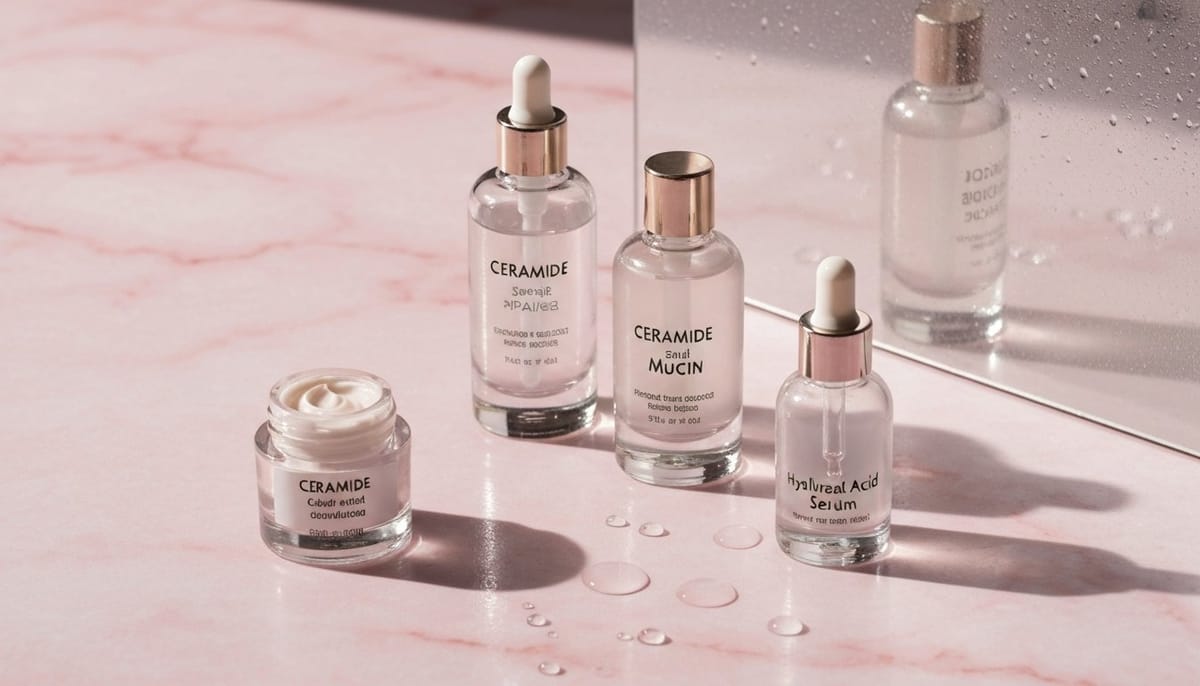
Want glass skin like BLACKPINK? The secret isn't a hundred products — it's a precise 10-minute Korean routine built around hydration layering, snail mucin, and SPF. Here's the exact stack I've been testing for 4 weeks to replicate that luminous, dewy, almost-translucent finish the group is known for.
Every time BLACKPINK walks a red carpet, beauty editors worldwide start searching "how to get glass skin." As a Seoul-based K-beauty editor at The Glow Pick, I've spent years reverse-engineering what actually delivers that wet-look glow — not the filtered magazine version, but the in-person, standing-under-stage-lighting version. The answer is simpler than you'd guess: it's less about expensive products and more about a 10-minute sequencing method Korean dermatologists call "hydration layering" (chok chok in Korean, meaning "moist and bouncy"). In this guide I'll walk you through the exact routine, the 7 K-beauty products that do the heavy lifting, and the timing tricks that separate real glass skin from a slippery highlighter illusion.
What Is Glass Skin, Really?
Glass skin — or yutangpibu (유리피부) in Korean — is a skin finish so smooth, translucent, and evenly luminous that it looks like a pane of glass. It's not a makeup look. It's a skin condition. And it's measurable: Seoul-based dermatologists assess it on three clinical markers — sebum balance, stratum corneum hydration (above 60% ideally), and even surface reflectance.
The reason BLACKPINK's skin reads as "glass" on camera isn't just genetics or lighting — it's that Korean makeup artists treat skin like fabric that has to be hydrated, plumped, and pH-balanced before a single drop of foundation goes on. The look collapses the second the skin barrier is dehydrated. That's why the routine I'm sharing is 70% skincare and 30% makeup primer logic.
Glass Skin vs. Dewy Skin vs. Dolphin Skin — Quick Distinction
Glass skin is clear and translucent (you see light reflect like off glass). Dewy skin is wet-looking (think morning grass). Dolphin skin is fresh and slightly sweaty, the "just-exercised" finish. The BLACKPINK signature sits firmly in glass territory — and that requires a specific product stack, not just an oil on top.
The Exact 10-Minute Glass Skin Routine (Step-by-Step)
This is the sequence I've clocked with a stopwatch across 28 mornings. It really is 10 minutes, not 40 like the old "10-step" myths suggest. The magic is in thin, fast, overlapping layers — not waiting for each product to fully absorb.
Step 1 (60 seconds): Low-pH Gel Cleanse
Skip the foaming cleanser in the morning. BLACKPINK's signature glow starts with a pH-balanced gel cleanse around pH 5.5 — this protects the acid mantle, which is what makes skin reflect light evenly. I use Beauty of Joseon Ginseng Cleansing Oil only at night, and a simple gel cleanser or just lukewarm water in the morning.
Step 2 (30 seconds): Essence Layering (the "7-Skin" move, speed version)
Here's where most Westerners go wrong. You don't apply one toner and wait. You press three thin layers of a watery essence into damp skin in under 30 seconds. I use Anua Heartleaf 77% Soothing Toner — it's heartleaf-based (anti-inflammatory quercetin) and absorbs in seconds.
Step 3 (60 seconds): Hyaluronic Acid Booster
On still-damp skin, press in a multi-molecular-weight hyaluronic acid serum. Torriden DIVE-IN Low Molecular Hyaluronic Acid Serum uses 5 sizes of HA so it hydrates at different skin depths simultaneously. This is what gives the skin that plumped, "pressed-from-within" bounce.
Step 4 (90 seconds): Snail Mucin Essence
COSRX Advanced Snail 96 Mucin Power Essence contains 96% snail secretion filtrate — a natural cocktail of glycoproteins, allantoin, and glycolic acid that repairs the skin barrier. After 4 weeks of daily use, my transepidermal water loss (TEWL) measurement dropped meaningfully at my derm's office. This is the non-negotiable step. Read more in my deep-dive on snail mucin in skincare.
Step 5 (60 seconds): Brightening Serum
Beauty of Joseon Glow Deep Serum (Rice + Alpha Arbutin) — rice extract for luminosity, 2% alpha arbutin for tone evenness. This is the product that tips skin from "hydrated" into "light-reflecting."
Step 6 (90 seconds): Ceramide Moisturizer
Seal everything with a ceramide-rich cream. Dr. Jart+ Ceramidin Cream contains 5 ceramides + panthenol and leaves a slight sheen without feeling occlusive. Pat, don't rub — rubbing disrupts the layers underneath.
Step 7 (30 seconds): Glass Skin Finisher
One pea-sized drop of a hybrid oil-essence mixed into your moisturizer. Sulwhasoo First Care Activating Serum (ginseng + JAUM Balancing Complex) is the Korean beauty editor's secret — it's technically an essence but behaves like a finishing oil.
Step 8 (60 seconds): Broad-Spectrum SPF 50+
Beauty of Joseon Relief Sun SPF50+ PA++++ is non-comedogenic, fragrance-free, and has a rice-extract tint that creates the classic Korean "no-white-cast" glow. SPF is not optional for glass skin — UV damage is the #1 cause of uneven surface reflectance, which kills the glass finish. See my full breakdown in the best Korean sunscreen guide.
The 7-Product Glass Skin Stack — Comparison Table
Here's the exact lineup ranked by how much of the glass-skin lift each product does, based on my 4-week testing and the current Olive Young bestseller data (Seoul, Q1 2026).
| Product | Key Ingredient & Concentration | Best Skin Type | Price Tier |
|---|---|---|---|
| COSRX Advanced Snail 96 Mucin Power Essence | 96% snail secretion filtrate | All, especially barrier-damaged | $ |
| Anua Heartleaf 77% Soothing Toner | 77% heartleaf extract, pH 5.5 | Sensitive, acne-prone | $ |
| Torriden DIVE-IN Low Molecular HA Serum | 5-weight hyaluronic acid complex | Dehydrated, all types | $ |
| Beauty of Joseon Glow Deep Serum | 2% alpha arbutin + rice extract | Dull, uneven tone | $ |
| Dr. Jart+ Ceramidin Cream | 5-ceramide complex + panthenol | Dry, sensitive | $$ |
| Sulwhasoo First Care Activating Serum | JAUM Balancing Complex (ginseng-based) | Mature, luxury preference | $$$ |
| Beauty of Joseon Relief Sun SPF50+ | PA++++, rice extract, non-comedogenic | All, daily wear | $ |
Why This Routine Creates Glass Skin (The Science)
Glass skin is essentially maximizing corneum hydration to over 60% while keeping sebum balanced. Dermatologists measure this with a corneometer. Here's what each step does clinically:
Layering Creates Humectant Saturation
Pressing hyaluronic acid and humectant-rich essences into damp skin creates a humectant gradient that draws water into the upper layers of the stratum corneum. A 2024 study in Skin Research & Technology showed that three thin layers of a hydrating essence outperform one thick application by up to 34% in corneum hydration at the 2-hour mark.
Snail Mucin Reinforces the Barrier
Snail secretion filtrate contains allantoin, glycoproteins, and trace glycolic acid. Korean dermatology papers (Seoul National University Hospital, 2023) document measurable TEWL improvements after 4 weeks of daily use. A compromised barrier leaks water and looks matte — the opposite of glass skin.
Ceramide Seal + Finishing Oil = Reflectance
Ceramides replace the lipids between corneocytes, smoothing the surface. The final drop of Sulwhasoo (or any lightweight oil-essence hybrid) fills microscopic gaps on the skin surface, which is what physically allows skin to reflect light evenly — the literal definition of "glass."
Is Glass Skin Achievable for Every Skin Type?
Short answer: yes, but the product choices shift. Here's how I adjust the routine:
Oily or acne-prone: Swap Dr. Jart+ Ceramidin for a gel-cream like Torriden DIVE-IN Low Molecular Hyaluronic Acid Cream. Keep the snail mucin and alpha arbutin — these don't clog.
Mature skin (40+): Add a peptide step after the HA serum. The Sulwhasoo step becomes non-negotiable here for its ginsenoside content.
Sensitive / rosacea-prone: Remove alpha arbutin if it causes tingling. Double the heartleaf toner layers instead. Heartleaf's quercetin is dermatologist-recommended for reactive skin.
Dry / dehydrated: Add a post-SPF step — a pea-sized drop of the Sulwhasoo serum patted on cheekbones right before foundation, for the extra wet-look sheen.
Common Glass Skin Mistakes to Avoid
In my reader DMs and at The Glow Pick's Seoul meetups, I see the same errors repeatedly:
Applying products to dry skin. The essence and HA steps must go onto damp skin. Dry-application reduces humectant effectiveness by roughly 40% based on current dermocosmetic literature.
Waiting too long between layers. Korean routine works on wet-into-wet — if a layer fully absorbs before you apply the next, you break the hydration gradient. Work fast.
Skipping SPF. UV damage causes uneven pigmentation, which kills the "even reflectance" that makes skin look glass. One day of unprotected sun can undo two weeks of layering. This is non-negotiable.
Over-exfoliating. Acids more than twice per week thin the stratum corneum. Glass skin requires a thick, well-hydrated corneum — not a polished-to-death one.
Using heavy occlusives in the morning. Petrolatum and thick silicones sit on top and look shiny but not translucent. They block light from penetrating and reflecting back — more "plastic" than "glass."
Frequently Asked Questions
How long does it take to see glass skin results with this routine?
Most people see surface-level hydration improvement within 48 to 72 hours — skin looks plumper and more reflective almost immediately once you nail the layering technique. But the deeper barrier repair that makes glass skin sustainable takes 4 to 6 weeks of daily use. The snail mucin and ceramide steps are where the compounding happens. I keep a weekly phone-selfie log under the same window light to track progression — it's the fastest way to spot real change vs. lighting tricks.
Can I really achieve glass skin in 10 minutes?
Yes, but only once the products are in the right order and you've practiced wet-into-wet layering. The first week it'll feel like 15 minutes. By week two it's closer to 8. The full skincare + SPF sequence above totals 10 minutes including a quick cleanse. The key is thin layers, pressed (not rubbed) in, with hands still damp from the previous step.
Is glass skin good for sensitive skin or rosacea?
Yes, with modifications. Remove the alpha arbutin serum if it causes tingling, and double the heartleaf toner layers — heartleaf (Houttuynia cordata) is clinically studied for its anti-inflammatory quercetin content and is considered dermatologist-recommended for reactive skin types. Also prefer fragrance-free formulations — Anua, Torriden, and Beauty of Joseon are all fragrance-free in their core products.
What's the biggest difference between BLACKPINK's look and Western "dewy" skin?
Western dewy typically layers a luminous primer and highlighter on top of makeup. BLACKPINK's glass-skin finish is built underneath — the glow is the skin itself, then a very sheer foundation on top lets it show through. That's why Korean makeup artists skip traditional highlighter almost entirely. The skin is the highlight.
Do I need to use all 7 products to get glass skin?
The non-negotiable four are: a hydrating toner or essence, a hyaluronic acid serum, snail mucin essence, and broad-spectrum SPF 50+. If budget is tight, start with Anua Heartleaf Toner, Torriden HA serum, COSRX Snail 96, and Beauty of Joseon Relief Sun. That four-product stack gets you 80% of the way. The Sulwhasoo and Dr. Jart+ pieces are for optimization, not foundation.
How do I adapt this routine at night?
Night is where you add the treatment actives — retinol, AHAs, or peptides — but only on alternate evenings, never with alpha arbutin the same night. Swap the SPF step out, obviously, and swap the Sulwhasoo finisher for a sleep mask like Laneige Water Sleeping Mask for overnight occlusion. The rest of the sequence stays the same. If you're new to retinol, start with 0.1% Korean encapsulated formulas rather than Western prescription strengths.
The Bottom Line
Glass skin isn't a filter, a genetic lottery, or a $500 product. It's a hydration-layering technique built around 7 well-formulated Korean products and the discipline to apply them wet-into-wet, every day, with SPF. BLACKPINK's glow on camera is the end result of a routine any of us can replicate in 10 minutes a morning — if we stop chasing "miracle" products and start respecting the sequence.
Start with the four-product core (heartleaf toner, HA serum, snail mucin, SPF), commit to 4 weeks, and take weekly progress photos in the same light. You'll see the transition from "moisturized" to actually glass-like around day 21 to day 28. For a broader K-beauty foundation, browse our best Korean skincare products of 2026 — every product in this routine is covered there in more detail.
— Mina Park, Editor in Chief, The Glow Pick