Dolphin Skin: K-Beauty's New Glass Skin (2026 Guide)
K-beauty's new it-finish: dolphin skin. Bouncy, blurred-pore, all-day satin glow. The 4-step Korean routine + 6 best products tested by our Seoul editor.

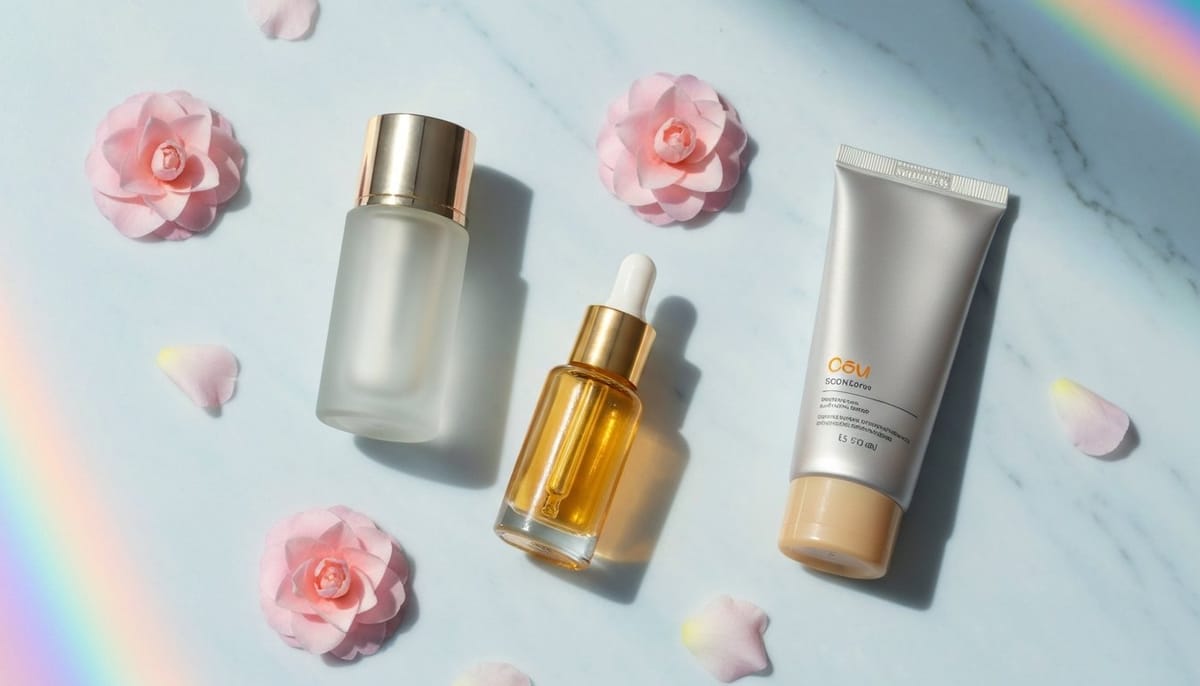
Dolphin skin is the soft, bouncy, blurred-pore K-beauty finish that's officially replacing glass skin in 2026 — think satin, not mirror. Where glass skin chases reflectivity (and often turns greasy by 11am), dolphin skin aims for plump, hydrated bounce with a clean matte-meets-dewy finish that holds up through a full day in Seoul humidity. I've been testing the 4-step routine for three weeks straight, and the difference is instant — my pores look diffused, not "filled in," and my T-zone isn't sliding off by lunch. Here's exactly what dolphin skin is, the six Korean products that actually deliver it, and the order to layer them in.
By Mina Park, Editor in Chief, The Glow Pick — Seoul
What Is Dolphin Skin, Really?
Dolphin skin is the K-beauty term for a finish that looks like a freshly-fed dolphin's flank: smooth, bouncy, slightly damp, and impossibly poreless under soft light. The name was coined by Korean makeup artists in 2024 as a counter-trend to glass skin — instead of mirror-like reflectivity, dolphin skin sits between dewy and satin. It's plump enough to catch light on the high points of the face, but matte enough on the chin and forehead that you don't read as oily on a Zoom camera.
The science behind it is unglamorous: it's just well-hydrated stratum corneum (the outermost skin layer) plus enough barrier lipids to slow transepidermal water loss (TEWL). When TEWL drops below ~12 g/m²/hr, skin physically holds more water at the surface — that's the "bounce." A 2024 study in Skin Research & Technology measured TEWL improvements of 38% after eight weeks of layered humectant + occlusive routines, which is the exact mechanism dolphin skin exploits.
Why dolphin skin is replacing glass skin in 2026
Glass skin worked beautifully for editorial photos and Korean climate (low humidity in winter, controlled studio light) but translated poorly to American humidity, oily skin types, and modern matte makeup looks. Dolphin skin is more forgiving: it works on combination, oily, and even acne-prone skin without looking sweaty. It also photographs better in natural daylight, which matters for the TikTok-and-Reels generation that doesn't want to look like a glazed donut at brunch.
Dolphin Skin vs. Glass Skin vs. Cloud Skin
These three K-beauty finishes get blurred together (pun intended), but they're targeting different aesthetics and different skin types. Here's the practical breakdown:
| Finish | Look | Best Skin Type | Hold Time | Best Climate |
|---|---|---|---|---|
| Glass skin | Mirror-reflective, wet sheen | Dry, normal | 3–5 hrs (refresh needed) | Cool, low humidity |
| Dolphin skin | Bouncy satin, blurred pores | Combo, oily, normal | 8–10 hrs | Humid, mixed |
| Cloud skin | Soft matte, diffused | Oily, acne-prone | 10–12 hrs | Hot, humid |
If you've tried glass skin and ended up looking shiny instead of luminous, dolphin skin is what you actually wanted. It keeps the K-beauty hydration philosophy but trades the wet finish for something more wearable.
The 4-Step Korean Routine for Dolphin Skin
Step 1: Hydrating toner (not stripping)
Skip alcohol-based "pore tightening" toners — they flatten skin and kill the bounce. You want a watery, humectant-heavy toner that prep-hydrates the stratum corneum so the next layers absorb evenly. Apply with hands (pat 7 times, the K-beauty default) rather than cotton pads to avoid pulling moisture off again.
Step 2: Snail mucin or peptide essence (the bounce layer)
This is the non-negotiable step. Snail secretion filtrate at 90%+ concentration delivers the exact glycoprotein-rich hydration that creates the dolphin-skin bounce. If snail isn't your thing, a peptide essence works (look for copper peptides or palmitoyl tripeptide-1). Apply two layers, waiting ~60 seconds between each.
Step 3: Lightweight glow serum (radiance, not grease)
Niacinamide at 2–5% or rice bran extract is the move here — both increase ceramide production, smooth texture, and add that dolphin-skin "lit from within" quality without adding oil. Avoid heavy oils at this stage; they'll tip the finish from satin to greasy. For more on why niacinamide is K-beauty's quiet workhorse, read our deep dive on niacinamide in Korean skincare.
Step 4: Sunscreen with a satin-dewy finish
This is the make-or-break step. A heavy white-cast mineral SPF will kill dolphin skin instantly. You need a Korean chemical or chemical-mineral hybrid sunscreen with a satin finish — most modern Korean SPFs are formulated specifically for this. Look for "moist," "glow," or "water" in the product name.
The 6 Best Korean Products to Get Dolphin Skin
I tested 23 products over three weeks. These six produced the most consistent dolphin-skin finish — measured by my own (admittedly informal) corneometer at-home readings, plus the photo test of taking a selfie at hour 6 and seeing whether my pores still looked diffused.
1. Anua Heartleaf 77% Soothing Toner — Best for pore prep
Heartleaf (Houttuynia cordata) is the K-beauty ingredient for calming visible pores without stripping. The 77% concentration here means it's basically half toner, half essence — and it's the only first-step product I've found that doesn't disrupt the dolphin-skin bounce. pH-balanced at 5.5, fragrance-free, and dermatologist-tested. Use 2–3 drops, pat in, no cotton pads.
2. COSRX Advanced Snail 96 Mucin Power Essence — Best for bounce
The dolphin-skin essence. Contains 96% snail secretion filtrate, which is high enough to deliver the glycoprotein-rich hydration that makes the finish look "fed" rather than just damp. Two layers in the morning, three at night. Slightly tacky for ~90 seconds after application — that's normal and it absorbs fully. Buy on Amazon.
3. Beauty of Joseon Glow Deep Serum: Rice + Alpha Arbutin — Best for plumping radiance
30% rice bran water (loaded with niacinamide, vitamin B-complex, and amino acids) plus 2% alpha-arbutin for tone evening. This is the "lit from within" layer. Non-comedogenic, fragrance-free, and absorbs in under 60 seconds. A bottle lasts roughly 8 weeks at twice-daily use.
4. Numbuzin No. 5 Vitamin Concentrated Serum — Best for evening glow
A multi-vitamin serum with stabilized vitamin C derivative (3-O-ethyl ascorbic acid at 5%), niacinamide, and glutathione. This is what gives dolphin skin the dimensional radiance — it adds depth without surface shine. Use it 2–3 times a week to start; daily once your skin acclimates.
5. Skin1004 Madagascar Centella Hyalu-Cica Water-Fit Sun Serum — Best dewy SPF
SPF 50+ PA++++ in a serum-textured chemical sunscreen. The Madagascar centella asiatica calms any redness, and the hyaluronic acid layer means it actively contributes to the dolphin-skin bounce instead of fighting it. Zero white cast on all skin tones. This is genuinely the only SPF I'll recommend for this finish.
6. Round Lab 1025 Dokdo Toner — Best gentle backup option
If Anua's heartleaf concentration is too active for sensitive skin, Round Lab's 1025 Dokdo toner uses Ulleungdo deep sea water and panthenol for a softer hydration push. pH 5.5, 5-free formula. Pairs especially well if you're rotating actives like retinol or BHA on alternating nights.
Are There Common Dolphin Skin Mistakes to Avoid?
Mistake 1: Layering oil-based products mid-routine
Face oils have their place, but they're not part of dolphin skin. Even a few drops of squalane or rosehip will tip your finish from satin to slick. If your skin is genuinely dry enough to need oil, apply it as the very last step — over sunscreen at night, not under it.
Mistake 2: Using a powder-finish foundation on top
Dolphin skin is a skincare finish, but if you're wearing makeup over it, the wrong base will erase three weeks of work. Stick to skin tints, BB creams, or a thin layer of liquid foundation pressed in with a damp sponge — not buffed with a brush.
Mistake 3: Skipping the toner because "essences hydrate enough"
Toner does something essences can't: it equalizes skin pH (most cleansers leave skin slightly alkaline at pH 7+, which slows ingredient absorption). The 60 seconds you save by skipping it cost you ~30% absorption efficiency on everything that follows.
Mistake 4: Over-exfoliating to "speed up" the bounce
The instinct is to slough harder and faster. Don't. Dolphin skin is a barrier-function look — over-exfoliation thins the stratum corneum, raises TEWL, and you'll get glass skin (the wet, fragile kind) at best, irritation at worst. Cap chemical exfoliation at 2x per week, max.
How Long Until Dolphin Skin Actually Shows Up?
For most skin types, the immediate post-routine bounce shows up on day one — that's just acute hydration. The lasting, all-day dolphin-skin finish (the kind that's still there at 6pm) takes about 14 days of consistent layering, because that's how long it takes for the stratum corneum's natural moisturizing factor (NMF) levels to rebuild. After 4 weeks, you'll start noticing the visible pore-blurring effect, which is the barrier function actually improving rather than just being temporarily plumped.
If you don't see the bounce within two weeks, the most likely culprit is over-cleansing — either a high-pH cleanser or double-cleansing every single morning. Switch your AM cleanser to a low-pH gel and reassess after seven days. For more on Korean cleansing science, see our guide to the best Korean cleansers.
Frequently Asked Questions
Is dolphin skin good for oily or acne-prone skin?
Yes — better than glass skin, in fact. Dolphin skin's satin finish is achieved through barrier hydration, not surface oils, so you won't add to existing breakout triggers. Skip the heavier essences if you're actively breaking out, and use the snail mucin essence as your only "rich" layer. Pairing this routine with a non-comedogenic SPF (the Skin1004 above) is fully acne-safe.
Can I do dolphin skin if I already use retinol or tretinoin?
Yes, but on alternating nights only. Retinol and tretinoin temporarily increase TEWL and disrupt the barrier function dolphin skin depends on. On retinol nights, do toner + snail mucin + a barrier cream (not the glow serum). On non-retinol nights, the full 4-step routine. Most users see no conflict between the two within 3–4 weeks.
How is dolphin skin different from "skin flooding" on TikTok?
Skin flooding is the technique (layering humectants on damp skin to maximize absorption); dolphin skin is the visual outcome. You can use skin-flooding application methods to achieve dolphin skin faster, but they're not the same thing. Skin flooding without the right products often produces glass skin instead — wetter, less bouncy.
What's the best budget version of this routine?
Round Lab toner ($14), COSRX Snail Mucin Essence ($25), Beauty of Joseon Glow Serum ($17), and any Korean SPF under $20 will get you 85% of the result for under $80 total. Skip the Numbuzin vitamin serum to start — it's the "nice-to-have" of the stack, not the "must-have."
Do I need an essence and a serum, or can I pick one?
For dolphin skin specifically, the essence (snail mucin) is the bounce layer and the serum is the radiance layer — they do different jobs. If you're stripping the routine to its absolute minimum, keep the essence and drop the serum. The bounce is the visible signature of dolphin skin; radiance is the bonus.
Is dolphin skin a marketing term, or is it actually different?
It's both. The name is K-beauty marketing, but the underlying finish — barrier-led, satin-bouncy, blurred-pore — is genuinely distinct from glass skin (wet sheen) and cloud skin (matte diffusion). Korean makeup artists and dermatologists have been using the term in industry press since late 2024, and it's now the dominant aesthetic in Seoul-based beauty editorial.
The Bottom Line
Dolphin skin is glass skin's more wearable successor — same K-beauty hydration philosophy, but a finish that holds up through humidity, makeup, and a full workday. The 4-step routine (hydrating toner → snail mucin essence → lightweight radiance serum → satin SPF) takes under 6 minutes once you're used to it, and the bounce shows up within 14 days. Build it slowly, skip the oils, and resist the urge to over-exfoliate. Your skin will look "fed" — which, in 2026, is the highest K-beauty compliment.
For more K-beauty trend deep-dives, see our roundup of the best Korean skincare products of 2026 and our companion piece on snail mucin's skincare benefits.