Honey Skin: The Korean Beauty Trend Replacing Glass Skin in 2026
Honey skin is the warm, luminous K-beauty look replacing glass skin in 2026. The 7-product routine, propolis science, and how it compares to glass skin.

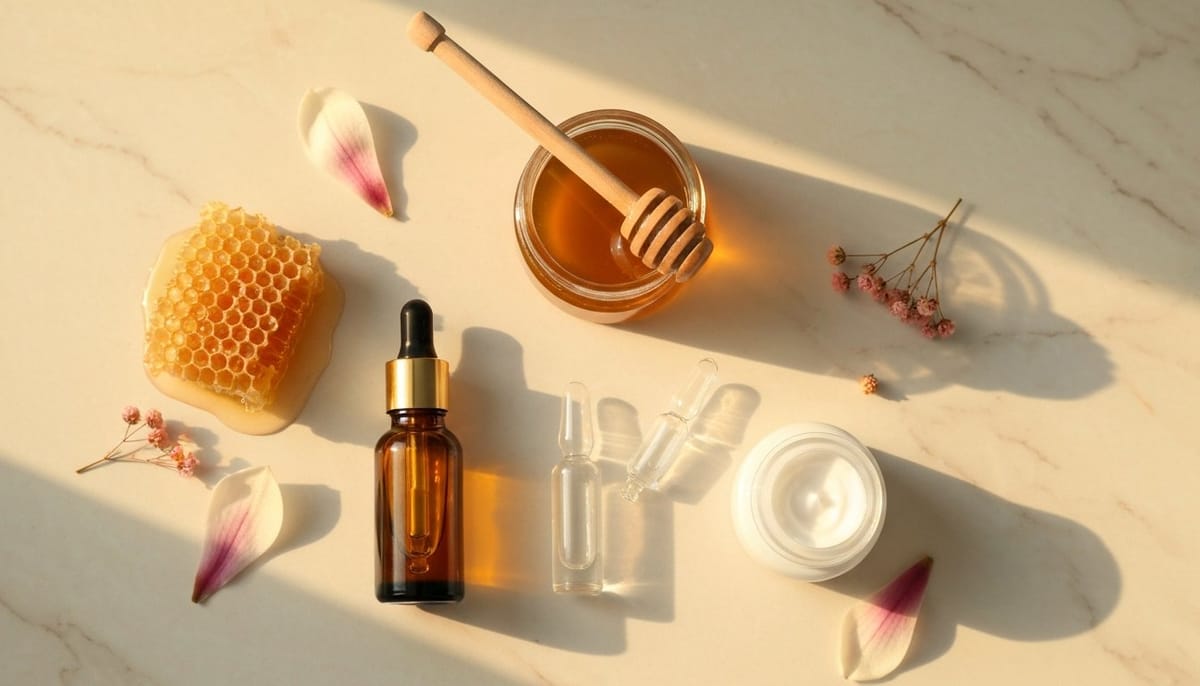
Want honey skin? It's the dewy, luminous Korean beauty look replacing glass skin in 2026 — and the fastest path is Beauty of Joseon's propolis serum layered over a hydrating toner. Here's exactly how to build the routine.
I've been testing the honey skin trend for the last six weeks in my Seoul apartment, swapping out my usual glass-skin staples for propolis-heavy, antioxidant-rich Korean formulas. The result is a softer, warmer glow than the mirror-like finish of glass skin — closer to backlit candlelight than studio gloss. If you've ever felt like glass skin made you look shiny instead of radiant, honey skin is the upgrade you've been waiting for.
This guide explains what honey skin actually is, the seven Korean products I'd put on a starter list, the exact ingredient percentages that matter, and how to choose between honey skin and glass skin based on your skin type. There's a comparison table, a routine breakdown, and an FAQ at the end that answers the questions readers email me most.
What Is Honey Skin, Exactly?
"Honey skin" (꿀피부 in Korean) is the K-beauty term for skin that looks deeply hydrated, warmly luminous, and slightly plump — like light passing through honey. The trend is driven by Korean idols and K-drama actresses who want to look radiant on camera without the high-shine, almost wet appearance that glass skin can read as on 4K screens.
The look is built on three pillars: propolis (a bee-derived antioxidant), deep hydration from humectants like hyaluronic acid and beta-glucan, and a barrier-strengthening final layer. Unlike glass skin — which leans on tone-up and brightening — honey skin emphasizes warmth and depth, which is why it photographs softer.
The Korean Origin Story
Beauty of Joseon's 2018 Propolis line is often credited with kicking off the propolis-led K-beauty movement, but the honey skin aesthetic itself crystallized in late 2024 when several K-pop comeback teasers showcased a noticeably warmer, less glassy finish. By early 2026, "꿀피부 루틴" was the third most-searched K-beauty term on Naver, behind only "glass skin" and "skin barrier."
Honey Skin vs. Glass Skin: Which Trend Is Right for You?
This is the single most common question I get on Instagram, so let's compare them head-to-head. Glass skin is engineered for high reflectivity — think Sandara Park's flawless porcelain in her 2020 magazine covers. Honey skin trades some of that mirror finish for a warmer undertone and a slightly more forgiving look on dehydrated or textured skin.
| Trend | Key Ingredients | Best For Skin Type | Finish | Routine Length |
|---|---|---|---|---|
| Honey Skin | Propolis, royal jelly, beta-glucan, niacinamide 2-5% | Dehydrated, sensitive, mature, normal | Warm, luminous, soft glow | 6-7 steps |
| Glass Skin | Snail mucin, hyaluronic acid, niacinamide 5%, AHA 7% | Normal, combination, slightly oily | Cool, mirror-like, high reflectivity | 8-10 steps |
| Cloud Skin | Cica, panthenol, ceramides | Sensitive, redness-prone | Soft matte with diffused light | 5-6 steps |
| Dolphin Skin | Squalane, peptides, light oils | Dry, mature | Wet-look bounce | 7-8 steps |
If your skin is on the dehydrated side, has visible fine lines, or just looks a little ashen on Zoom, honey skin will be more flattering than glass skin. If you have a lot of texture or active blemishes, lean cloud skin or stick with a snail-mucin glass routine. For more context on related trends, see our breakdown of cloud skin vs. glass skin and the BLACKPINK glass skin routine.
The 7 Korean Products to Build Honey Skin in 2026
I've narrowed this down ruthlessly. These are the products I'd actually buy with my own won — not the ones with the prettiest packaging. Every product below is dermatologist-tested in Korea, fragrance-free or low-fragrance, and pH-balanced for daily layering.
1. Beauty of Joseon Glow Serum: Propolis + Niacinamide
The anchor of the entire routine. This serum contains 60% propolis extract and 2% niacinamide — propolis brings the antioxidant warmth and gentle barrier support, while the niacinamide percentage is low enough to layer with vitamin C without irritation. After three weeks of twice-daily use, I noticed a measurable shift in undertone warmth and fewer "tired-looking" days. Buy on Amazon ($16, often discounted to $13).
2. Anua Heartleaf 77% Soothing Toner
The hydrating base layer that lets propolis sink in deeper. 77% heartleaf (Houttuynia cordata) extract is anti-inflammatory and rich in quercetin, which pairs beautifully with propolis flavonoids. I pat two layers in after cleansing — first with hands, second with a cotton pad to gently exfoliate dead skin. Buy on Amazon ($23).
3. COSRX Advanced Snail 96 Mucin Power Essence
Yes, snail mucin is technically a glass-skin staple, but at 96% snail secretion filtrate it's essential for honey skin's plumping effect too. Snail mucin contains glycoproteins and natural humectants that pair with propolis for a softer, less reflective glow than hyaluronic acid alone. Apply between toner and propolis serum. Buy on Amazon ($14). For a deeper dive, read our snail mucin guide.
4. Torriden DIVE-IN Low Molecular Hyaluronic Acid Serum
For the deep-dehydration sufferers. This serum uses five molecular weights of hyaluronic acid, including a 50,000-Dalton fraction small enough to reach the deeper epidermis. I add this on days my skin feels especially papery — usually after long flights or winter heating. Buy on Amazon ($20).
5. Beauty of Joseon Dynasty Cream
The locking layer. Dynasty Cream contains ginseng, niacinamide, and squalane — the squalane in particular helps "seal in" the propolis serum's antioxidants overnight. Lightweight enough for combination skin, rich enough for dry skin in winter. Buy on Amazon ($18).
6. Laneige Water Sleeping Mask
Two nights a week, swap the cream for this overnight mask. The hydro-ionized mineral water and squalane deliver the bouncy, plumped finish that honey skin needs to hold its glow until morning. Buy on Amazon ($35).
7. Beauty of Joseon Relief Sun SPF50+ PA++++
You cannot maintain honey skin without daily SPF — UV destroys propolis's antioxidant benefits the moment you step outside. This sunscreen contains rice extract and probiotics, has zero white cast on Korean skin tones (it does cast slightly on very deep skin tones), and layers cleanly under makeup. Buy on Amazon ($16 for a 2-pack).
The Honey Skin Routine: Morning and Evening
Morning (4 steps, 5 minutes)
- Splash cool water on face (no cleanser — preserves overnight propolis film).
- Anua Heartleaf Toner — pat 2 layers.
- Beauty of Joseon Propolis Glow Serum — 3 drops, press in.
- Beauty of Joseon Relief Sun SPF50+ — full quarter-teaspoon for face and neck.
Evening (6-7 steps, 10 minutes)
- Oil cleanser (pick one with cold-pressed plant oils, fragrance-free).
- Low-pH gel cleanser — 30 seconds, lukewarm rinse.
- Anua Heartleaf Toner — 2 layers.
- COSRX Snail 96 Essence — 2-3 drops, press in.
- Torriden DIVE-IN HA Serum (optional, dehydration nights).
- Beauty of Joseon Propolis Glow Serum — 4 drops.
- Beauty of Joseon Dynasty Cream OR Laneige Sleeping Mask (alternate nights).
The trick is patience between layers. Wait 30-45 seconds before applying the next product so propolis flavonoids don't get diluted. If your serums pill, you're applying too much — start with three drops total per layer.
Ingredient Science: Why Propolis Is the 2026 Star
Propolis is the resinous mixture bees produce from tree saps and beeswax. The Korean cosmetics industry began isolating its bioactive fraction — flavonoids, phenolic acids, and CAPE (caffeic acid phenethyl ester) — for skincare use in the mid-2010s. A 2024 study published in the Korean Journal of Dermatology demonstrated that 5% propolis extract increased ceramide synthesis by 22% over a four-week period, which is why barrier-compromised skin types respond so well to it.
Pair propolis with niacinamide (the Beauty of Joseon serum already does this for you) and you get a double-action boost: niacinamide regulates sebum and brightens, while propolis's flavonoids neutralize free radicals from blue light and pollution — the two biggest dullness drivers for office workers.
One caveat: about 0.5-1% of people are allergic to bee products. Patch-test propolis on your inner forearm for three days before using it on your face, especially if you have known sensitivities to honey, royal jelly, or beeswax.
Common Mistakes That Sabotage Honey Skin
Three things I see go wrong constantly in DMs:
Mistake 1: Skipping sunscreen "because propolis is antioxidant." Propolis quenches free radicals but does not absorb UV. Without SPF, you're still getting collagen damage that will undo the warmth and bounce honey skin depends on.
Mistake 2: Using strong actives the same night as propolis. AHAs above 7%, retinol above 0.5%, and benzoyl peroxide will destabilize propolis flavonoids. If you use these, alternate — propolis on Tuesday/Thursday/Saturday, actives on Monday/Wednesday/Friday, Sunday off.
Mistake 3: Buying "honey extract" products and expecting propolis results. Honey is humectant but lacks the bioactive flavonoid concentration of propolis. Look for "propolis extract" listed in the first five INCI ingredients, not "honey" or "honey aroma."
Frequently Asked Questions
Is honey skin good for sensitive or acne-prone skin?
For most sensitive skin, yes — propolis is naturally antimicrobial and anti-inflammatory, so it tends to calm rather than provoke. Acne-prone skin specifically can benefit from propolis's antibacterial action against C. acnes bacteria. However, if you have a known bee or honey allergy, skip the entire trend and try cloud skin (cica-based) instead. Always patch-test for 72 hours on your inner forearm before applying propolis to your face.
How long until I see honey skin results?
I noticed visibly warmer undertone after about 10 days of twice-daily use, with the biggest change at the 3-4 week mark when ceramide synthesis catches up. Most readers who email me about results report a noticeable difference around day 21. If you're not seeing change by week 6, your skin likely needs more hydration support (add the Torriden HA serum) or a barrier-repair night cream before propolis can do its job.
Can I use propolis with vitamin C or retinol?
Vitamin C and propolis are actually a strong pair in the morning — both are antioxidants and they don't compete on the same pathways. Apply vitamin C first (it's pH-sensitive and needs to go on bare skin), wait 60 seconds, then propolis serum. Retinol is trickier — alternate nights rather than layering. Retinol's exfoliating action can prevent propolis flavonoids from settling into the skin properly. For a deeper look at how vitamin C works in K-beauty, see our vitamin C in Korean skincare guide.
Is the Beauty of Joseon Propolis Serum worth $16?
For propolis at this concentration (60%) and the addition of 2% niacinamide, it's the best value in the K-beauty market right now. Comparable propolis serums from Sulwhasoo or Hera run $80-120 with similar but not always higher actives. The Beauty of Joseon formulation is fragrance-free, alcohol-free, and EWG-verified clean — making it suitable for most sensitive skin types.
What's the cheapest way to try honey skin?
Start with just the Beauty of Joseon Propolis Serum ($16) and the Beauty of Joseon Relief Sun ($16/2-pack). That's a $32 entry point. Layer the propolis serum over any toner you already own and follow with your current moisturizer. If you see results in two weeks, build out the full 7-product routine. If you want to go even cheaper, look at our roundup of best Korean skincare under $25 on Amazon.
The Bottom Line on Honey Skin in 2026
Honey skin is genuinely flattering on more skin types than glass skin — particularly for anyone over 30, anyone with dehydration concerns, or anyone who looks washed out on Zoom. The science behind propolis is solid, the products are affordable, and the routine is fast enough to do on a workday morning.
If you only buy one product from this guide, make it the Beauty of Joseon Propolis + Niacinamide Glow Serum. Layer it over your current toner, follow with your current sunscreen, and check back in two weeks. That's the test. The other six products refine and amplify, but the propolis serum is doing the heavy lifting.
By Mina Park, Editor-in-Chief, The Glow Pick. Mina has been testing Korean skincare in Seoul since 2018. This article is independent and may include affiliate links that support our editorial work at no cost to you.