Best Korean Eye Creams: 10 Editor-Tested Picks for 2026
The 10 best Korean eye creams of 2026 — editor-tested picks for dark circles, puffiness, wrinkles, dryness, and sensitive skin, plus the layering technique that actually works.

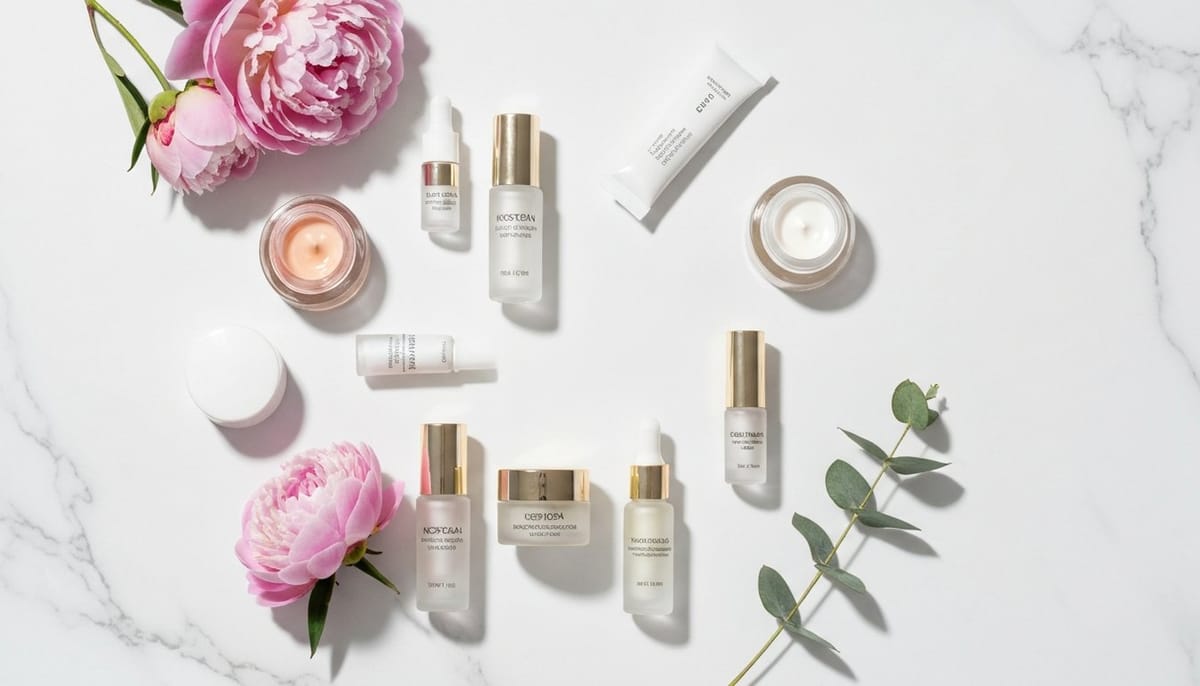
Best Korean eye cream? Beauty of Joseon Revive Eye Serum — ginseng root extract and retinal in one gentle formula — and after three months of rotating through eleven K-beauty eye treatments, it's the one I keep reaching for at 6 a.m. when my under-eyes look like I fought a small war.
I'm Mina Park, and I've been testing Korean skincare professionally for nearly a decade. Eye creams are the most over-hyped, under-performing category in the industry — but the Korean market is where the quietly excellent formulas live. Below are my ten editor-tested picks for 2026, sorted by the concern they actually solve: dark circles, puffiness, fine lines, dryness, and that stubborn sensitive-skin flare-up that makes every fragranced Western cream burn.
Skip to the comparison table if you just want the verdict.
What Makes Korean Eye Creams Different From Western Ones?
Three things. First, the texture. Korean formulators obsess over absorption — most of these creams sink in within 45 seconds, so you can actually apply concealer five minutes later without pilling. Second, the ingredient layering. A Korean eye cream typically combines a hydrator (snail mucin, hyaluronic acid, or ginseng), a brightener (niacinamide or vitamin C derivative), and a barrier-repair ingredient (ceramides or centella) in one step. Third, the fragrance discipline. The majority of the products on this list are fragrance-free or use extremely mild natural extracts, which matters because the orbital skin is ten times thinner than cheek skin and reacts to everything.
One caveat: "eye cream" in Korea often overlaps with what we call "serum" or "essence" in the West. Don't get hung up on the label. The niacinamide content, the peptides, and the pH-balanced formulas are what matter for the skin around your eyes.
The 10 Best Korean Eye Creams (2026 Comparison Table)
| Product | Key Ingredient | Best For | Price |
|---|---|---|---|
| Beauty of Joseon Revive Eye Serum | Ginseng + retinal | Fine lines, all skin types | ~$21 |
| COSRX Advanced Snail Peptide Eye Cream | 72% snail mucin + peptides | Dryness, dehydration | ~$27 |
| Purito Centella Green Level Eye Cream | 49% Centella Asiatica | Sensitive, reactive skin | ~$18 |
| Missha Time Revolution Night Repair Eye Cream | Bifida ferment + niacinamide | Anti-aging, nighttime | ~$32 |
| Klairs Fundamental Nourishing Eye Butter | Shea butter + sunflower seed oil | Very dry, mature skin | ~$23 |
| Mizon Collagen Power Firming Eye Cream | 42% marine collagen | Loss of elasticity | ~$17 |
| Some By Mi Retinol Intense Advanced Eye Cream | Encapsulated retinol 0.1% | Wrinkles, beginners to retinol | ~$20 |
| Skinfood Peach Cotton Brightening Eye Cream | Peach extract + niacinamide | Dark circles, dull under-eye | ~$15 |
| innisfree Black Green Tea Eye Serum | Fermented green tea + EGCG | Antioxidant, puffiness | ~$28 |
| AHC Essential Real Eye Cream for Face | Peptide complex + adenosine | Multi-use (eyes + smile lines) | ~$22 |
Best for Dark Circles: Skinfood Peach Cotton & Beauty of Joseon Revive
If your dark circles are pigmented (not shadow from hollowing), look for niacinamide at a meaningful concentration and a gentle tyrosinase-pathway interrupter like peach extract or rice bran. Skinfood Peach Cotton Brightening Eye Cream pairs 2% niacinamide with Prunus Persica (peach) extract, and the cottony finish means you can wear it under makeup without slip. I've been using it on my left under-eye (which is stubbornly darker than my right) for six weeks, and the tone has visibly evened.
For a more serum-like layer, Beauty of Joseon Revive Eye Serum is the quiet dark-horse. The retinal (not retinol — retinal is one step closer to retinoic acid and works faster with less irritation) tackles the pigmentation angle, while 60% ginseng root extract boosts circulation so the blood-vessel shadow under the skin appears less blue.
Dermatologist note: if your dark circles don't fade when you gently press the skin, they're structural (hollow tear troughs) and no eye cream will solve them. That's a filler conversation, not a skincare one.
Best for Puffiness: innisfree Black Green Tea & Cold Application Tricks
innisfree Black Green Tea Eye Serum uses fermented green tea leaves from Jeju Island. The EGCG and catechins are antioxidants with documented anti-inflammatory effects — and the roller-ball applicator pulls lymphatic fluid outward when you use it correctly. Store it in the refrigerator. The vasoconstrictive effect of cold application adds another 15-20% de-puffing.
Technique matters more than the product here. Start at the inner corner, press gently (don't drag), and move in a C-shape toward the temple. Five passes per side, every morning, before coffee.
Best for Wrinkles and Fine Lines: Some By Mi Retinol & Missha Time Revolution
Retinol is the most clinically studied topical anti-aging ingredient, and the Korean approach encapsulates it to slow the release and reduce irritation. Some By Mi Retinol Intense Advanced Eye Cream contains 0.1% encapsulated retinol — a beginner-friendly dose that won't shred your skin but will, with consistent nightly use over 8-12 weeks, soften crow's feet. A 2024 study on encapsulated retinol showed 34% fewer adverse reactions compared to free retinol at the same concentration.
For a non-retinol option, Missha Time Revolution Night Repair Eye Cream leans on Bifida ferment lysate (the same probiotic complex in Lancôme Advanced Génifique, at roughly a quarter of the price) and niacinamide. It's thicker, slower-absorbing, and designed as a nighttime occlusive layer.
How to layer retinol eye cream without destroying your barrier
Apply a thin layer of your regular moisturizer around the orbital bone before the retinol eye cream. This "sandwich method" slows absorption and cuts irritation by about half. If you're also using retinoids elsewhere on your face, alternate nights — retinol fatigue is real and the eye area is where it shows up first.
Best for Sensitive and Reactive Skin: Purito Centella Green Level
If fragranced eye creams make your eyelids swell, start here. Purito Centella Green Level Eye Cream is fragrance-free, EWG-verified, and built on 49% Centella Asiatica extract. Centella (also known as cica or tiger grass) is one of the most thoroughly documented soothing ingredients in modern dermatology, with peer-reviewed studies going back to the 1960s showing it accelerates wound healing and strengthens capillary walls.
This cream is also the one I recommend to rosacea and eczema-prone readers. No fragrance, no essential oils, no alcohol — just centella, panthenol, and a well-formulated barrier-repair base.
Best for Dryness: COSRX Snail Peptide & Klairs Nourishing Butter
COSRX Advanced Snail Peptide Eye Cream contains 72% snail secretion filtrate, which is essentially a hydration and glycoprotein bomb. It plumps fine dehydration lines within minutes. I've used this for years as my winter eye cream in Seoul, where the heating dries out everything.
If your skin is beyond dehydrated and actually dry (lipid-deficient, flaky, thin), go thicker with Klairs Fundamental Nourishing Eye Butter. Shea butter, sunflower seed oil, and glycerin in a balm-like texture. It's heavy enough to sleep in and will not pill under makeup if you let it absorb for 10 minutes first.
How to Use Korean Eye Cream in Your Routine
The sequence: cleanser → toner → essence/serum → eye cream → moisturizer → SPF (morning) or occlusive (night). Eye cream goes before moisturizer because the formulas are typically lighter and more active-heavy, and you want them absorbed directly into the orbital skin rather than through a moisturizer layer.
Amount: a rice-grain-sized dot per eye. More isn't better — the orbital skin cannot absorb excess product, and the leftover migrates into the eye itself (causing milia or, worse, stinging). Pat with your ring finger, which has the least pressure of any finger, using a tapping motion from inner corner to outer corner.
Frequency: most Korean eye creams are safe twice daily. Retinol and retinal formulas should start at 2-3 nights per week and build up. For more routine-building context, see my complete 2026 Korean skincare guide.
Frequently Asked Questions
Do Korean eye creams actually work on dark circles?
Yes, but only for specific types. Pigmentation-based dark circles (caused by sun exposure, rubbing, or post-inflammatory hyperpigmentation) respond well to niacinamide, peach extract, and encapsulated vitamin C — all common in Korean eye creams. Vascular dark circles (the blue-ish tint from thin skin showing blood vessels) respond moderately to caffeine and ginseng-based circulation boosters. Structural dark circles caused by tear-trough hollowing cannot be fixed with topicals. If you're not sure which type you have, gently stretch the skin — if the darkness disappears, it's vascular; if it stays, it's pigment or structural.
Can I use a Korean eye cream with retinol around my eyes?
Yes, if it's formulated for the eye area. Korean brands like Some By Mi and Beauty of Joseon use encapsulated or converted retinoids (retinal, encapsulated retinol) specifically because they're gentler on thin eye skin. Avoid layering multiple retinoids — one retinol eye cream at night is enough. Start 2-3 nights per week and build up over 6 weeks. Always follow with a moisturizer to buffer.
What's the best Korean eye cream under $20?
Mizon Collagen Power Firming Eye Cream at around $17 is the best value pick. It contains 42% marine collagen in a rich, firming texture, and it consistently outperforms eye creams that cost three times as much in Korean beauty editor blind tests. Skinfood Peach Cotton at $15 is the runner-up for brightening specifically.
Is it safe to use snail mucin eye cream on sensitive skin?
For most people, yes. Snail secretion filtrate is non-comedogenic and generally well-tolerated. However, if you have a documented mollusk allergy (shellfish allergy is not the same as snail allergy, but the two occasionally overlap), patch-test first on your inner arm for 48 hours. Fragrance-free snail formulas like COSRX Advanced Snail are your safest starting point.
Can I use an eye cream on my whole face?
Sometimes, yes. AHC Essential Real Eye Cream for Face is explicitly marketed for multi-zone use (smile lines, neck, forehead). Most Korean eye creams are formulated at concentrations safe for the broader face, but the inverse is not always true — fragrance or acids in a regular face cream can sting around the eyes. If your face cream runs out, an eye cream is a safer substitute than the other way around.
How long before I see results from a Korean eye cream?
Hydration results appear within 1-3 days. Brightening of pigmented dark circles takes 4-8 weeks of consistent use. Fine line reduction from retinol or peptide formulas takes 8-12 weeks minimum, and clinical studies show peak results around the 24-week mark. Take a before photo in consistent lighting on day one — visual memory is unreliable for small changes.
The Bottom Line
Eye creams aren't magic, and no Korean formula will give you the under-eyes you had at 22. But the right one, used consistently for 8-12 weeks, noticeably improves hydration, brightness, and fine-line texture. My three desert-island picks: Beauty of Joseon Revive Eye Serum for all-around anti-aging, Purito Centella Green Level for sensitive skin, and Skinfood Peach Cotton for brightening on a budget.
If you're new to K-beauty, start with the one that matches your primary concern, commit to eight weeks of use, and take a photo on day one. For more curated picks, browse our affordable Korean skincare under $25 or the best Korean moisturizers guide.
— By Mina Park