Korean vs Japanese Skincare: Key Differences
Korean skincare brings innovation and layering; Japanese skincare offers minimalism and refinement. Discover the key differences and the best products from each tradition.

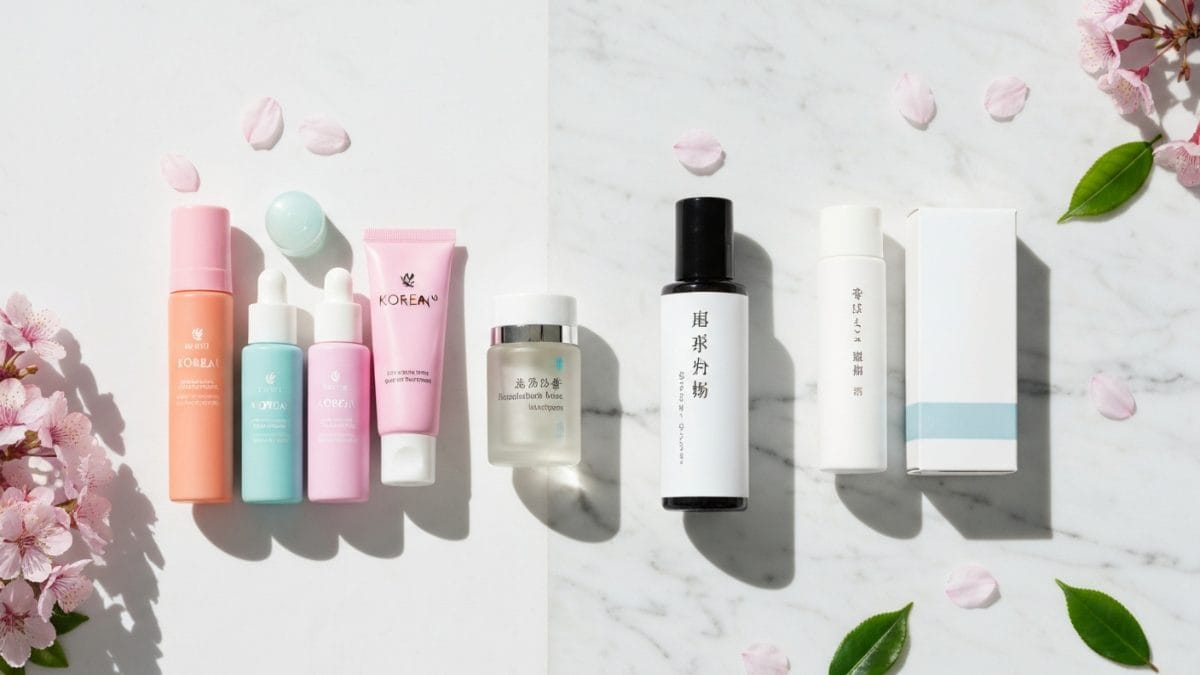
Korean skincare (K-Beauty) and Japanese skincare (J-Beauty) are two of the most influential beauty traditions in the world. While both originate from East Asia and share a deep cultural commitment to healthy, radiant skin, they take remarkably different approaches to achieving that goal. Understanding these differences can help you build a routine that truly works for your skin.
In this comprehensive guide, we break down the key differences between Korean and Japanese skincare — from philosophy and ingredients to product textures and routines — so you can decide which approach (or combination of both) is right for you.
Philosophy: Innovation vs. Minimalism
The most fundamental difference between K-Beauty and J-Beauty lies in their underlying philosophies.
Korean skincare is driven by innovation and experimentation. The Korean beauty industry moves fast, constantly launching new ingredients, textures, and product formats. K-Beauty encourages a multi-step approach — the famous 10-step routine — where each product targets a specific concern. The philosophy centers on prevention: start early, layer products strategically, and invest in your skin before problems appear. This proactive mindset has made K-Beauty a global phenomenon, especially among younger consumers who enjoy discovering new products and customizing their routines. If you're new to this world, our Korean Skincare for Beginners guide is the perfect starting point.
Japanese skincare, on the other hand, embraces minimalism and refinement. J-Beauty brands tend to perfect a small number of hero products over decades rather than chasing trends. The philosophy is rooted in mochi-hada (rice-cake skin) — soft, bouncy, and luminous skin achieved through simplicity and consistency. Japanese routines typically involve fewer steps, with each product formulated to do more. Where K-Beauty says "more layers, more benefits," J-Beauty says "fewer products, better formulations."
Ingredients: Cutting-Edge vs. Time-Tested
Both traditions draw on remarkable ingredients, but the emphasis differs significantly.
Signature K-Beauty Ingredients
Korean skincare is famous for embracing unconventional, science-backed ingredients:
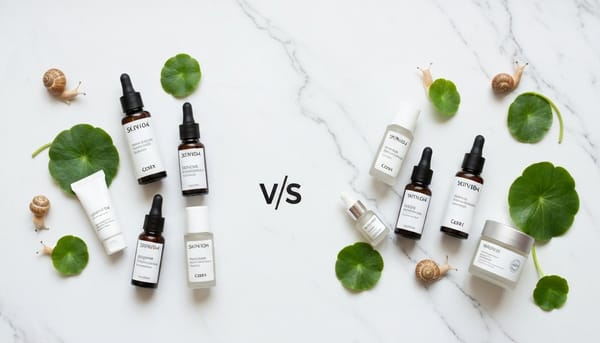
- Snail Mucin: One of K-Beauty's most iconic ingredients, snail mucin is rich in glycoproteins, hyaluronic acid, and glycolic acid. It helps with hydration, repair, and scar fading. The COSRX Snail Mucin 96% Power Repairing Essence remains the gold standard — affordable, effective, and endlessly repurchased. Learn more in our deep dive on snail mucin in skincare.
- Centella Asiatica (Cica): A powerhouse for calming irritation, reducing redness, and strengthening the skin barrier. Centella-based products are a staple in K-Beauty for sensitive and acne-prone skin. Read our full guide on Centella Asiatica in K-Beauty.
- Heartleaf (Houttuynia Cordata): An emerging star ingredient known for its anti-inflammatory and antibacterial properties. It's especially popular in toners and serums for oily, acne-prone skin. We cover everything about it in our Heartleaf ingredient guide.
- Fermented Extracts: Fermentation increases the potency and bioavailability of ingredients. Products like the Missha Time Revolution The First Treatment Essence use fermented yeast extracts (similar to the high-end SK-II) to brighten and hydrate at a fraction of the price.
- Green Tea: Rich in antioxidants and catechins, green tea protects against environmental damage while soothing the skin. The Innisfree Green Tea Seed Serum is a beloved option that delivers lightweight hydration with antioxidant protection.
Signature J-Beauty Ingredients
Japanese skincare relies on ingredients refined over centuries:
- Hyaluronic Acid: While used globally, Japan pioneered its application in skincare. The Hada Labo Gokujyun Premium Hyaluronic Acid Lotion uses multiple molecular weights of hyaluronic acid to hydrate at every skin level — it's a cult favorite for good reason.
- Rice Bran (Komenuka): Used for centuries in Japan, rice bran is packed with vitamins, ceramides, and antioxidants. It brightens, softens, and nourishes the skin. Explore this ancient ingredient further in our rice water skincare guide.
- Camellia Oil (Tsubaki): A lightweight yet deeply nourishing oil that has been a Japanese beauty secret for generations. Rich in oleic acid, it absorbs quickly and leaves skin silky smooth without greasiness.
- Green Tea (Matcha): Both traditions love green tea, but Japanese skincare often uses higher-grade matcha extracts, prized for their concentrated antioxidant content and calming properties.
The Routine: Multi-Step vs. Streamlined
Perhaps the most visible difference between K-Beauty and J-Beauty is the number of steps in a typical routine.
The Korean Skincare Routine
The classic Korean routine can include up to 10 steps, though most people customize it to 5–7 steps depending on their needs:
- Oil Cleanser: Double cleansing starts with an oil-based cleanser to dissolve makeup and sunscreen. The Banila Co Clean It Zero Cleansing Balm is a fan favorite — it melts into skin and rinses clean without residue.
- Water-Based Cleanser: A gentle foam or gel cleanser removes remaining impurities.
- Exfoliant: Chemical exfoliants (AHA, BHA, PHA) are preferred over physical scrubs.
- Toner: Korean toners are hydrating, not astringent — they prep skin to absorb serums.
- Essence: A lightweight, watery treatment that's the heart of the K-Beauty routine.
- Serum/Ampoule: Concentrated treatments targeting specific concerns.
- Sheet Mask: Used 1–3 times per week for an intensive hydration boost.
- Eye Cream: Targeted care for the delicate under-eye area.
- Moisturizer: Seals everything in. The Laneige Water Sleeping Mask doubles as a rich overnight moisturizer that you wake up to with plump, glowing skin.
- Sunscreen: Non-negotiable in K-Beauty. The Beauty of Joseon Relief Sun: Rice + Probiotics SPF50+ is beloved for its elegant, non-greasy finish that works beautifully under makeup.
The Japanese Skincare Routine
Japanese routines typically include 4–5 focused steps:
- Oil Cleanser: Japan also embraces double cleansing. The DHC Deep Cleansing Oil is an iconic Japanese oil cleanser — olive-oil based, incredibly effective, and gentle enough for daily use.
- Foaming Cleanser: Japanese cleansers are known for their rich, dense lathers.
- Lotion (Toner): In Japan, "lotion" refers to a hydrating toner, not a moisturizer. This is where the Hada Labo Gokujyun mentioned above shines.
- Serum or Milk: A lightweight treatment layer.
- Moisturizer/Cream: The Tatcha The Dewy Skin Cream exemplifies the J-Beauty approach — a single luxurious product that hydrates, plumps, and protects in one step.
- Sunscreen: Just as important in J-Beauty. The Biore UV Aqua Rich Watery Essence SPF50+ is arguably the world's most popular Asian sunscreen — incredibly lightweight with a water-like texture that disappears on skin.
Textures and Formulations
K-Beauty and J-Beauty differ in how products feel on the skin:
Korean products tend to be playful and varied in texture. You'll find everything from bouncy water-gel creams to thick sleeping masks, whipped mousses, and jelly serums. K-Beauty loves to experiment with formats — cushion compacts, sheet masks, and peel-off formulas all emerged from Korea's culture of innovation. Products are often designed to be "fun" to use, with satisfying textures and aesthetically pleasing packaging.
Japanese products prioritize elegance and function. Textures tend to be simpler — watery lotions, lightweight milks, and clean-rinsing oils. There is less emphasis on novelty and more on how the product performs over weeks and months of consistent use. Packaging is typically minimalist and understated, reflecting the J-Beauty belief that what's inside the bottle matters more than what's outside.
Sun Protection: A Shared Obsession
One area where K-Beauty and J-Beauty completely agree is the importance of sun protection. Both traditions consider sunscreen the single most important step in any skincare routine — and it shows. East Asian sunscreens are widely regarded as the best in the world, offering high protection with cosmetically elegant formulas that Western brands are still trying to match.
Korean sunscreens like the Beauty of Joseon Relief Sun tend to incorporate skincare ingredients (rice extract, probiotics, niacinamide) alongside UV filters, making them multifunctional. Japanese sunscreens like the Biore UV Aqua Rich are legendary for their weightless, invisible finish — you forget you're wearing sunscreen at all.
Price Point and Accessibility
K-Beauty is generally more affordable and accessible. Many beloved Korean products — like the COSRX Snail Mucin or Banila Co Clean It Zero — are priced under $20 and widely available on Amazon and specialty retailers. The Korean beauty market is highly competitive, which keeps prices consumer-friendly. Check our guide on where to buy Korean skincare in the US for the best shopping options.
J-Beauty spans a wider price range. Drugstore brands like Hada Labo and Biore are very affordable, while luxury lines like Tatcha and SK-II command premium prices. The Japanese market has both ends covered, but the mid-range tends to be slightly higher than Korean equivalents.
Which Is Better for Your Skin?
The honest answer: neither is inherently "better." The best approach depends on your skin type, lifestyle, and personal preferences:
- Choose K-Beauty if: You enjoy experimenting with products, prefer a multi-step routine, have specific skin concerns you want to target with dedicated products, or love trying the latest innovations. K-Beauty's strength is customization — you can build a routine that addresses exactly your needs.
- Choose J-Beauty if: You prefer simplicity, want a streamlined routine with fewer products, value time-tested formulations over trends, or have sensitive skin that responds better to gentle, minimal ingredients. J-Beauty's strength is refinement — each product is designed to do its job exceptionally well.
- Mix both: Many skincare enthusiasts (ourselves included) combine the best of both worlds. A routine might include a Japanese cleansing oil, a Korean essence, and a Japanese sunscreen. There are no rules — the best routine is the one you'll actually stick to.
K-Beauty vs. J-Beauty: Quick Comparison
| Aspect | K-Beauty (Korean) | J-Beauty (Japanese) |
|---|---|---|
| Philosophy | Innovation, prevention, customization | Minimalism, refinement, consistency |
| Routine Steps | 7–10 steps | 4–5 steps |
| Key Ingredients | Snail mucin, centella, fermented extracts | Hyaluronic acid, rice bran, camellia oil |
| Textures | Playful, varied (gels, cushions, masks) | Elegant, functional (lotions, milks, oils) |
| Price Range | Budget to mid-range | Budget to luxury |
| Best For | Customizers and experimenters | Minimalists and sensitive skin |
| Sunscreen Style | Skincare-infused, multifunctional | Weightless, invisible finish |
The Bottom Line
Korean and Japanese skincare represent two brilliant approaches to achieving beautiful skin. K-Beauty brings excitement, innovation, and endless customization options, while J-Beauty offers the quiet confidence of perfected formulations and streamlined routines. Understanding the strengths of each tradition empowers you to build a routine that draws on the best of both worlds.
Whether you're starting your skincare journey or refining a routine you've built over years, both K-Beauty and J-Beauty have something valuable to offer. Our recommendation? Start with the products that address your biggest skin concerns, stay consistent, and don't be afraid to mix and match across traditions. Your skin doesn't care about borders — it just wants to glow.
Ready to get started? Check out our Korean Skincare for Beginners guide or explore our ingredient deep dives on niacinamide and snail mucin to learn more.
Frequently Asked Questions
Is Korean skincare better than Japanese skincare?
Neither is objectively better — they excel in different areas. Korean skincare leads in innovative textures, trend-driven ingredients (snail mucin, centella, heartleaf), and multi-step routines. Japanese skincare excels in minimalist formulations, UV protection technology, and time-tested ingredients like rice ferment and green tea. Your choice depends on skin type and preferences.
Can I mix Korean and Japanese skincare products?
Absolutely. Many skincare enthusiasts combine the best of both — for example, using a Japanese sunscreen (like Biore UV Aqua Rich) with Korean serums (like COSRX Snail Mucin). Both follow similar layering principles (thin to thick) and ingredient safety standards, making them fully compatible.
Why is Japanese sunscreen considered better than Korean sunscreen?
Japanese sunscreens have historically led in elegant UV filter technology, producing ultra-lightweight, invisible finishes. However, Korean sunscreens have caught up significantly — products like Beauty of Joseon Relief Sun now rival Japanese formulations in texture while adding skincare benefits. The gap has narrowed considerably since 2024.
Which is more affordable: Korean or Japanese skincare?
Korean skincare generally offers more competitive pricing at the drugstore/mid-range level ($8-20 per product). Japanese brands like Hada Labo and Canmake are similarly affordable, but premium Japanese brands (SK-II, Shiseido) tend to be pricier than Korean luxury equivalents (Sulwhasoo, AmorePacific). Both markets offer excellent budget options.