How to Read Korean Skincare Labels: A Complete Guide
Korean skincare labels can feel like a puzzle — INCI names, Korean characters, unfamiliar certifications. I've been decoding them for years, and here's everything you need to know to shop smarter and layer products the right way.

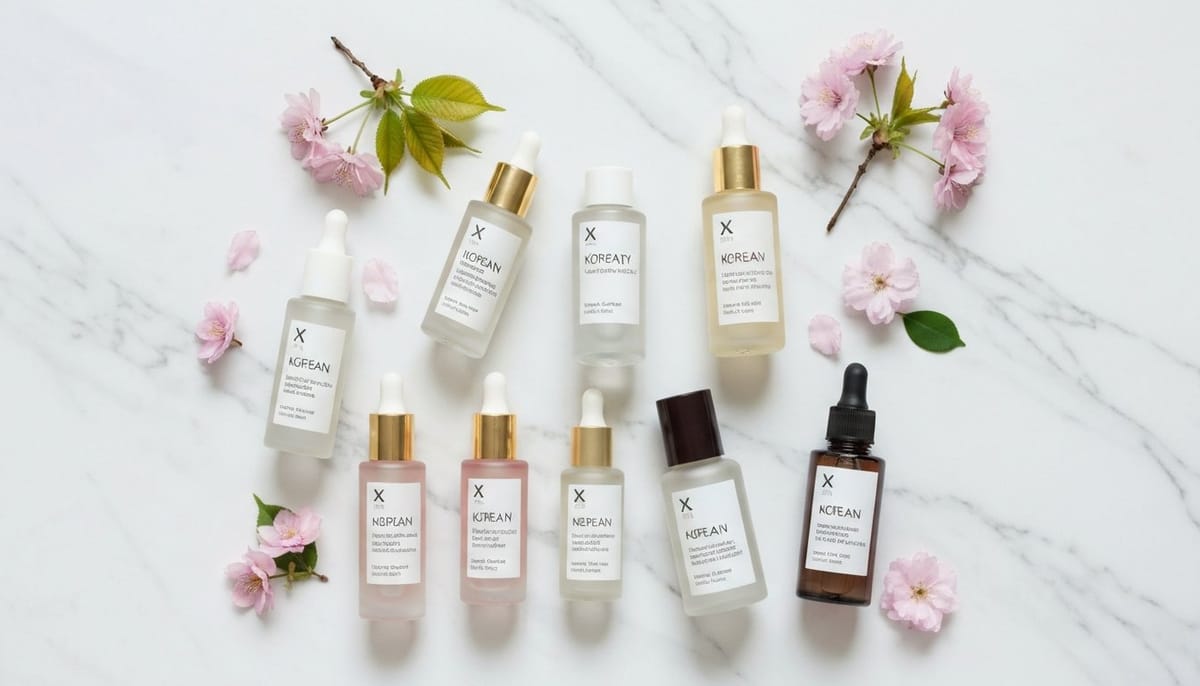
Okay, real talk — the first time I picked up a Korean essence at a Seoul beauty store, I had absolutely no idea what I was looking at. The label was part Korean, part English, part scientific alphabet soup. And I had a chemistry degree. That's how dense Korean skincare labels can get.
But here's the thing: once you know what to look for, reading a Korean skincare label becomes second nature. You start seeing whether a product is actually worth its price point, catching potential irritants before they wreck your skin barrier, and understanding why certain products work better in certain steps of your routine. In this guide, I'm going to walk you through everything — from the ingredient list structure to expiration codes to certifications that actually matter.
Why Korean Skincare Labels Are Different
Most Korean skincare products sold internationally are required to list ingredients in both Korean and English (INCI — International Nomenclature of Cosmetic Ingredients). But some brands, especially smaller or more artisanal ones, only label in Korean. That's where things get tricky for international shoppers.
There are a few key differences compared to Western labels:
- Dual-language listings: Many products list ingredients in Korean (한국어) first, then the INCI Latin name below or alongside.
- Water listed as "정제수" or "수": In Korean, purified water is 정제수 (jeongjae-su). It's almost always the first ingredient — which is normal.
- Concentration rarely disclosed: Unlike the EU, Korean regulations don't require brands to disclose exact percentages for most ingredients (with some exceptions like niacinamide or retinol at therapeutic levels).
- Functional cosmetics labeling: Korea has a regulatory category called "기능성 화장품" (functional cosmetics) for products that whiten, protect against UV, or reduce wrinkles. These require additional approval and will say so on the label.
The Ingredient List: How to Read It Like a Pro
In both Korea and the EU/US, cosmetic ingredients must be listed in descending order by concentration. The first ingredient is the most abundant, the last is the least. This is the single most important thing to understand when evaluating any product.
I use a simple mental framework: divide the list into thirds.
- Top third: The base of the product — water, humectants (like glycerin 글리세린), emollients, and primary actives. These make up the bulk of the formula.
- Middle third: Supporting actives, texture modifiers, and performance boosters. Niacinamide (나이아신아마이드), fermented ingredients, and botanical extracts often live here.
- Bottom third: Preservatives, fragrance, dyes, and trace actives. The concentration here is typically under 1%. Note: anything in the bottom third is still active on your skin — preservatives work at very low concentrations, and some sensitizers are problematic even in tiny amounts.
As someone who spent years in cosmetic R&D, I want to debunk something: a product listing a trendy ingredient like centella asiatica or snail mucin near the bottom of the list is largely a marketing move. The effective concentration for most actives needs to be in the top half of the list to actually do something meaningful. Check out my deep-dive on Centella Asiatica in K-beauty for more context on how concentration affects results.
Key Korean Terms Every Skincare Shopper Needs to Know
Here are the most common Korean label terms you'll encounter, with pronunciations and what they mean:
Ingredients & Formula
- 전성분 (Jeon-seong-bun): "All ingredients" — this is the heading for the full ingredient list. Look for this on the back panel.
- 정제수 (Jeongjae-su): Purified/distilled water. Almost always the first ingredient.
- 글리세린 (Geulliserin): Glycerin — a ubiquitous humectant and skin-conditioning agent.
- 부틸렌글라이콜 (Butylene Glycol): A lightweight humectant and solvent.
- 향료 (Hyang-ryo): Fragrance/parfum. If you have sensitive skin, seeing this in the top half of a list is a caution flag.
- 색소 (Saekso): Colorant/dye.
- 방부제 (Bangbuje): Preservative. Common ones include phenoxyethanol, ethylhexylglycerin, and sodium benzoate.
Product Type & Purpose
- 에센스 (Essence): A lightweight, concentrated serum-like treatment.
- 세럼 (Serum): Typically more viscous and highly concentrated.
- 토너 (Toner): First step after cleansing, preps skin for absorption.
- 크림 (Cream): Moisturizer.
- 선크림 / 선스크린 (Sunscreen): SPF products are regulated as functional cosmetics in Korea.
Skin Type Indicators
- 건성 피부 (Geonsong pibu): Dry skin
- 지성 피부 (Jiseong pibu): Oily skin
- 복합성 피부 (Bokhapseong pibu): Combination skin
- 민감성 피부 (Mingamsseong pibu): Sensitive skin
How to Read the Expiration Date
Korean skincare labels use two types of date indicators:
1. Manufacturing Date + Period After Opening (PAO)
Many Korean products show a manufacturing date rather than an expiry date. Look for 제조 (Jejo) = manufactured, followed by a date in YYYY.MM.DD format. Pair this with the PAO symbol — the open-jar icon with a number and "M" (months) — to calculate when to toss it.
2. Best Before / Expiry Date
Some products list 사용기한 (Sayong gihan) = expiry/use-by date. This is the safest indicator. If it's passed, don't use it regardless of how the product looks or smells.
Practical tip: I always write the opened date on my products with a permanent marker. A PAO of 12M means 12 months after opening — not from manufacture.
Certifications: Which Ones Actually Mean Something
The Korean skincare market has a lot of certification seals. Here's what to trust and what's mostly marketing:
Certifications Worth Looking For
- 식품의약품안전처 (MFDS Approved): The Ministry of Food and Drug Safety approval seal for functional cosmetics. This is a real regulatory approval, not self-certified.
- EWG Verified™: Some Korean brands have pursued US EWG verification. It's credible and means the formula has been reviewed for ingredient safety.
- COSMOS / ECOCERT: Organic/natural certifications from European bodies.
- Cruelty-Free (Leaping Bunny / PETA): Korea banned animal testing for cosmetics in 2017, but the certification adds verification for export markets.
- 비건 인증 (Vegan Certified): Korea Vegan Certification, issued by the Korean Vegan Society or similar bodies.
Certifications That Are Less Meaningful
- Dermatologist tested / 피부과 테스트 완료: Only means a dermatologist was involved in testing — it says nothing about the results being positive.
- Hypoallergenic: No standardized definition in Korean regulations. Take this with a grain of salt.
Spotting Potential Irritants: A Quick Checklist
For those with reactive skin, here are the ingredients I always scan for first:
- Alcohol Denat. (변성알코올): Drying and can compromise barrier function with long-term use. Small amounts in the bottom third are generally fine; anything in the top 10 ingredients, I'd avoid on dry or sensitive skin.
- 향료 / Parfum / Fragrance: One of the most common sensitizers. Korean brands are getting better at "무향" (fragrance-free) formulas, especially in the sensitive skin category.
- Essential oils (에센셜 오일): Natural doesn't mean gentle. Citrus-derived oils (limonene, linalool) can be phototoxic; mint and eucalyptus are common irritants.
- Propylene Glycol (프로필렌글라이콜): Generally safe but can irritate very sensitive skin at higher concentrations.
- Sulfates (황산염): Mostly in cleansers. SLS (sodium lauryl sulfate) strips the barrier; ammonium lauryl sulfate is gentler.
For a deeper look at ingredients that strengthen your skin barrier, my niacinamide guide covers one of the most well-supported barrier-boosting actives in K-beauty, and the snail mucin breakdown digs into another cult ingredient's actual science.
Functional Cosmetics: Korea's Special Regulatory Category
Products that claim to whiten skin, reduce wrinkles, or provide UV protection are classified as 기능성 화장품 (functional cosmetics) and require pre-market approval from the MFDS. This means the active ingredient must be present at a specific regulated concentration. When you see "기능성 화장품" on a Korean sunscreen or brightening serum, it's not just a marketing claim — it's a regulatory designation backed by actual testing. That level of consumer protection genuinely puts some Western markets to shame.
Quick Reference: 60-Second Label Checklist
When you pick up a new Korean skincare product, here's my quick scan:
- Find 전성분 (ingredient list) — usually on the back or bottom panel.
- Check what's in the top 5 ingredients. Water, humectants, or actives? Good. Alcohol or fragrance in the top 3? Caution for sensitive skin.
- Scan for 향료 (fragrance) and essential oils — note where they fall in the list.
- Find the expiry date (사용기한) or manufacturing date + PAO icon.
- Check for functional cosmetics seal if buying sunscreen, brightening, or anti-aging products.
- Look for certifications relevant to your values (vegan, cruelty-free, ECOCERT).
Conclusion
Reading a Korean skincare label is a skill, not a talent — meaning you get better with practice. The more labels you read, the faster you start recognizing patterns: brands that lean heavy on fragrance, product lines that bury their hero ingredients in the bottom third, formulas with genuinely thoughtful layering of actives.
Trust me on this one: the 60 seconds you spend scanning an ingredient list before buying will save you money, skin flare-ups, and regret. Start with the basics I've covered here, and the next time you're shopping on YesStyle or Olive Young, you'll know exactly what you're putting on your face.
Have a label you can't decode? Drop it in the comments — I love a good ingredient detective session.
By Mina Park
Common Korean Skincare Label Terms Decoded
| Korean Term | Romanization | English Meaning | What It Tells You |
|---|---|---|---|
| 성분 | Seongbun | Ingredients | Full ingredient list (INCI order) |
| 제조일자 | Jejo Ilja | Manufacture Date | When product was made (YYYY.MM.DD) |
| 사용기한 | Sayong Gihan | Expiry Date | Use before this date |
| 용량 | Yongryang | Volume/Weight | Product amount (mL or g) |
| 피부 테스트 완료 | Pibu Teseuteu Wanryo | Dermatologically Tested | Passed skin safety testing |
| 약산성 | Yaksanseong | Mildly Acidic (pH 5.5) | Skin-barrier friendly pH level |
| 무향료 | Muhyangryo | Fragrance-Free | No added fragrances |
| 저자극 | Jeojakgeuk | Low-Irritation | Formulated for sensitive skin |
Frequently Asked Questions
Are Korean skincare ingredient lists the same as Western ones?
Yes, Korea follows INCI (International Nomenclature of Cosmetic Ingredients) standards, so ingredient names are listed in Latin/English scientific names in descending concentration order. However, Korean products also include a Korean translation and may list EWG safety grades on some brands.
What does the number after PA mean on Korean sunscreens?
PA stands for Protection Grade of UVA, a Japanese/Korean rating system. PA+ means some UVA protection, PA++ moderate, PA+++ high, and PA++++ extremely high. Most dermatologists recommend PA+++ or PA++++ for daily use. This is equivalent to the European "broad spectrum" label.
How do I check if a Korean product is cruelty-free?
Look for 동물실험을 하지 않은 (no animal testing) on the label. Korea officially ended mandatory animal testing for cosmetics in 2015 for most categories. Brands like COSRX, Klairs, and Beauty of Joseon are certified cruelty-free. Check Leaping Bunny or PETA databases for verification.
What does 화장품 vs 기능성화장품 mean on Korean labels?
화장품 (hwajangpum) means regular cosmetics, while 기능성화장품 (gineungseong hwajangpum) means "functional cosmetics" — products that have been clinically tested and approved by Korean FDA (MFDS) for specific claims like whitening, anti-wrinkle, or UV protection. This is a higher regulatory standard.